

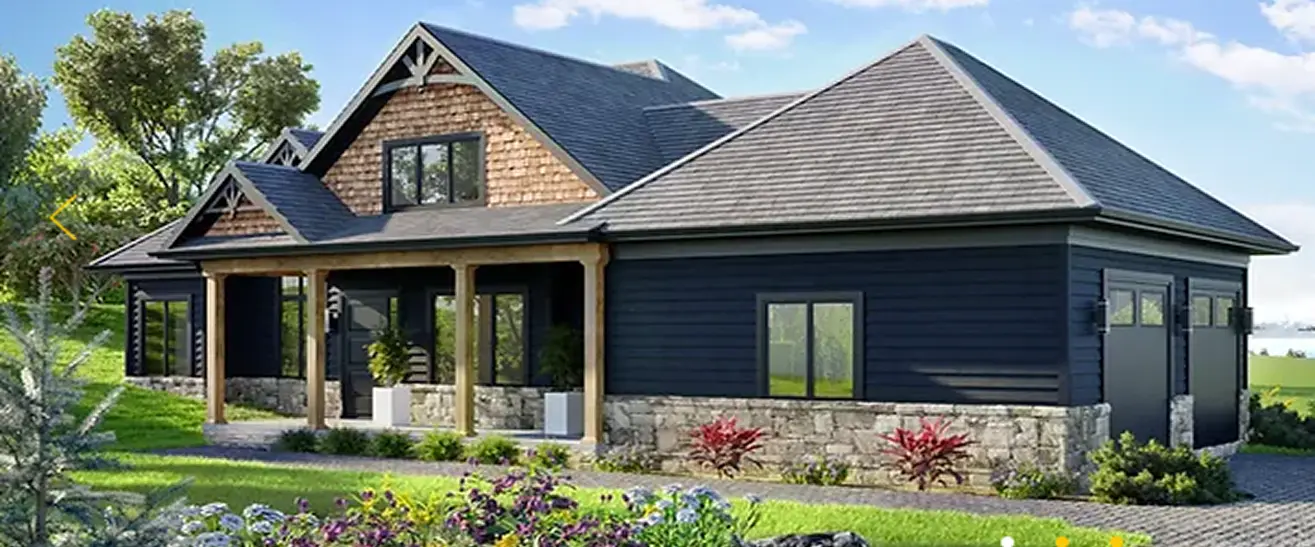
If a custom builder or contractor quotes a price per square foot, be skeptical. Without seeing your architectural plans or knowing your vision, how can they accurately determine the cost of your custom home?
With custom building you’re able to customize every aspect of your home to fit your lifestyle. The number of design choices and options is innumerable, so how is it possible for a contractor to provide a price based on just a square footage?
Custom building allows you to tailor every aspect of your home to fit your lifestyle. With endless design possibilities, how can a contractor accurately price a home based solely on square footage? In our 20+ years of experience, we’ve never built two homes of the same size with the exact same design, layout, and features—there are infinite layout and design possibilities. Is it not possible for every 3,500 square foot home to have the same price.
Let’s break it down with some math. Suppose we have a 3,500-square-foot home with 3 bedrooms, 3 bathrooms, and 3 garages. Now, compare that to a 2,500-square-foot home with the same features. Since the same features are packed into a smaller space, the price per square foot for the 2,500-square-foot home should actually be higher. So how can the cost per square foot be the same? The more expensive features of a home are the bathrooms, garages, staircases and kitchen. Adding features that are more costly increase the cost of a home, not necessarily the size of the home. Although larger homes will cost more, the price of a custom home does not increase in direct proportion to its size. The cost per square foot of a larger hom is generally less than that of a small home.
There are actually many building components that do not relate to the square footage of the house. For example, in Ontario, the garages are not counted within the square footage of a home—you could have 2, 3, or even 4 garages attached to a 3,500-square-foot home, and the square footage would remain the same. The same applies to patios or decks. Whether you have a wrap around front porch or a large backyard deck, these outdoor spaces don’t contribute to the square footage and therefore aren’t factored into the price per square foot generally provided by contractors.
Square footage alone doesn’t dictate building costs. A reputable contractor will calculate the cost of a custom home by individually estimating the materials and labor needed for each phase of construction, rather than simply multiplying the square footage by a random figure. The design and features of a home have a greater impact on the cost rather than the size of a home.
The cost of building a custom home is based on the combined cost of materials and labor for each phase of construction. This includes site preparation and excavation, foundation work, framing and lumber, masonry, HVAC systems, electrical and plumbing, as well as interior finishes like flooring, cabinetry, countertops. Each component contributes to the overall budget depending on the scope of work involved. Design choices and layouts will affect the cost. For example, adding more interior walls increases the amount of framing and lumber needed. And the more bathrooms you include, the higher the costs for plumbing, flooring, cabinetry, and even your septic system.
Beyond your home’s layout- the aesthetics plays a major role in the budget. The type of building materials that you select influence the cost of your home. Lets look at exterior cladding materials as an example. Masonry such as stone is typically double the price of brick. If the exterior of a home is covered in stone it will be much more expensive than a home finished with brick, siding or stucco. There are also different price points within a specific building material.
Beyond your home’s layout, aesthetics also play a significant role in shaping the overall budget. The building materials you choose can have a major impact on cost.
Take exterior cladding, for example. Masonry materials like natural stone are typically about twice the price of brick. So, a home finished entirely in stone will cost significantly more than one clad in brick, siding, or stucco. And even within a single material type, there’s a wide range of price points depending on quality, finish, and installation complexity. For instance, wood siding tends to be much more expensive than vinyl but cheaper than aluminum siding—not just in material cost, but in labor as well.
The total price for materials and installation also depends on how much of the material is being used and the complexity of working with it. That’s why it’s so important to understand exactly what’s included in your builder’s quote. For example, if one builder includes natural stone while another includes manufactured stone, there will be a significant price difference. Natural stone can cost three to four times more than man-made alternatives, and it also takes about twice as long to install due to the added difficulty and skill required.
Your design preferences matter—not just for style, but for cost too.
To get an accurate price estimate, the first and most important step is having a set of architectural drawings, also known as design drawings. Floor plans and elevations act as your project’s specification sheet, making them one of the most valuable investments in the building process. These detailed plans allow reputable builders to provide precise and reliable quotes
With a set of architectural drawings a builder/ contractor should be able to provide you with a price that is 99% accurate. These drawings allow the contractor to do individual take offs and provide accurate pricing for each individual building material and its labour.
As I mentioned before, square footage plays a small role in the cost calculation of your home. If you are in the preliminary stages of determining whether or not you would want to build a custom home, rather than asking what a per square foot price is, describe the type of home you’re looking to build and ask for a ballpark estimate for the cost to build. This price won’t be extremely accurate but it will allow you to determine if it is generally in your budget and if it is worth investing in a set of architectural drawings.
These are the questions that a contractor should be asking you in order to provide you with a very rough estimate include:
- How many square feet are you looking for?
- How many bedrooms?
- How many bathrooms?
- How many garages? Are they attached or detached?
- Is the home a bungalow or two story?
- How many kitchens are you looking for (i.e main kitchen, spice kitchen, pantry, butler’s pantry)?
- Does the home have a walk out basement or walk up basement?
- Do you want any patios, decks or balconies?
- Any unique features such as an indoor pool, theatre room, golf simulator, car lift, or elevator?
- What type of exterior cladding are you looking for (mostly stone, brick, stucco, type of siding, etc)?
Each of the questions listed above plays a significant role in determining the cost of a custom home. Requesting a price based solely on square footage is an outdated approach that applies only to production housing. If you’re building a custom home tailored to your lifestyle and intended as your forever home, don’t settle for an arbitrary estimate. Instead, invest in architectural drawings and obtain quotes from contractors based on detailed specifications to ensure you understand exactly what you’re paying for.